News

LG Hamburg Court verdict on NYTimes rights to Wordle in Germany

Wordle rights

A small puzzle maker from Hamburg, Germany, secured the name Wordle in Germany the same day the New York Times bought the puzzle.

The New York Times has been on a crusade in 2024 to stop people from using the name Wordle. It seems the company has hit a snag in Germany after courts rejected the company’s claim to the name.

As the story goes, German puzzle maker Stefan Heine secured the rights to Wordle in Germany the same day that the New York Times purchased Wordle from its original investor for an undisclosed sum. Josh Wardle—the original inventor—had previously published the game for free on his personal website and hadn’t copyrighted the name before the American publisher bought it.

The New York Times took Heine to court to make him stop using the name. Its biggest argument is that Heine registered the name under the publisher’s nose to keep them from competing in Germany. Heine denied filing the trademark in bad faith and even offered to market the game alongside the American publisher in Germany. According to Heine, the New York Times weren’t interested in the offer.

Ultimately,  The Regional Court of Hamburg (Landgericht Hamburg – LG Hamburg) ruled that the New York Times had no right to the name before it purchased the game, and as such, neither party could justify or prove sole ownership of the trademark.

In the eyes of the German courts, the NYT’s EU trademark and Heine’s German trademark were of “equal seniority.” In simpler terms, the two will have to share the name in Germany as both have equal rights to it.


Stefan Heine considers this a win

Heine has made his living selling simpler puzzle games such as Wordle. He is best known for his Sudoku and Rätsel puzzle books available on Amazon. The Sudoku puzzles in particular are known for catering specifically to hardcore players with some of the most difficult puzzles in the genre.

Speaking to the media, Heine said he wasn’t interested in the money and considered the court ruling a win. “Puzzles have been my passion for 29 years, I want to see good puzzles in the world, and Wordle is a lovely puzzle that is fun,” he said after the ruling.

“I would hope that the New York Times would now come to its senses and recognize that it will not win, or that it listens to me and understands why I did it,” Heine continued.


A spinoff the New York Times can’t take down

The New York Times has sent takedown notices to hundreds of developers who have made their own variants of Wordle. Per 404 Media, who first reported on the takedown notices, the New York Times is going after anyone who uses the name Worlde and anyone who uses the same general idea.

In a statement to 404, the New York Times said that they “have no issue with individuals creating similar word games that do not infringe on The Time’s ‘Wordle’ trademarks or copyrighted gameplay.”

Except in Germany, where the courts say that the publisher has no other choice.

Strands added to The NYT Games App on Android and iOS

The excellent word search game has been publicly available on NYT’s website since June 2024.

Connections Game Board

The New York Times seems to have another hit on its hands with Strand. The word search game officially launched in June 2024 and has already garnered quite a following. That following is expected to grow as the publisher has added the game to its NYT Games app on iOS and Android.

Strands joins NYT’s other popular games, including Wordle, Connections, Spelling Bee, and the NYT’s excellent crossword puzzle in both its mini and full configurations. The game’s inclusion in the NYT Games app has already happened. If you have the app installed, check the App Store or Google Play for an update or you can download the app fresh to check out Strands.

“Strands is currently our third most searched game, behind Wordle and Connections,” the paper said in its press release. “Even before joining the NYT Games app, Strands has grown to be nearly as popular as Spelling Bee, our other word game.”

The paper commented on its high completion percentage as well, stating that 83% of players find the Spanogram—the theme word hidden within the puzzle—each day and the completion rate is around 81%. That puts it on par with Mini Crossword and Tiles.

Game Introduction

The game was first introduced in March 2024 in beta where it stayed until its launch in June. So far, it’s been a rousing success for the US publisher, even if some folks have criticized its occasional Gen-Z slang from time to time. Like several other games before it, Strands was created from the NYT’s annual Game Jam event where people pitch game ideas. Once Strands was chosen, the publisher developed with the help of the publisher’s puzzle creators.

How do you play Strands?

For the uninitiated, Strands is a lot like the classic word search game where you find words in a jumble of letters. There are two primary differences with Strands. The first is that each word in the scramble has a theme and one of those words is the theme itself. So, for example, one of today’s Strands themes was “gnaw-it-alls.” Within the puzzle was the word “rodent,” which acted as the theme word for the puzzle. From there, the goal is to find all of the rodent-themed words.

The other big difference is that you use every letter on the board. There are no dead letters and letters don’t repeat, so each letter is part of one of the words. If you happen to find a word that isn’t on the theme list, you’ll earn progress on a hint bar that shows you where one of the words is. The puzzle concludes once every word has been found.

For a few months, the game has only been available on NYT’s website. The website does work on mobile but it’s a lot cleaner and better on the Games app. Once you finish your game, you can also check out your various stats such as how many hints you needed to find everything.

LinkedIn Launches its own Puzzle Games

Sites like the New York Times have seen online gaming thrive over recent years. So, it’s no surprise to see other companies getting in on the act. Even Netflix is trying with mobile gaming and a Sonic game. One name you might not associate with this sort of digital recreation is LinkedIn. However, they have just launched their own equivalent to the NYT Games site. It maight not on the same level right now, but the titles and features show potential.

Game Puzzles

The concept is similar to NYT Games in that players get access to digital brainteasers that change daily. There will be data on winning streaks and high scores to incentivize players to come back each day and challenge themselves. Each title should be available under the My Network Tab.

The LinkedIn gaming section currently has three options for players to enjoy. They are all different enough that it will be fun to go through all three every day.

Two of the games are word-based with familiar concepts. Pinpoint works through word association. Players get a series of words that appear on the screen and have to figure out the thematic link. The challenging aspect comes from the timer. The words appear one after the other, and the goal is to figure it out in as few clues as possible. This gives the game some similarities with Wordle as players compete with themselves to better their score.

Crossclimb requires a little more problem-solving as there are clues to solve and a word ladder to complete. The words are all one letter removed from the previous entry, but it still takes some thought to get the words in the right order.

The final game is something a bit different because it is more visual. Queens is a play on the Sudoku format, but without so many figures to fit into the board. This time each section of this Sudoku board/chessboard is home to one queen. Those queens cannot be on the same row or collum – just like the Sudoku numbers – and cannot touch.

The games are as simplistic as you can get in terms of their player experience and objective. This has its benefits when bringing in people who aren’t “gamers” but appreciate a good brainteaser. The games are also short enough that you can get through the daily offerings in one short tea break. Whether that’s enough to make the games engaging long-term remains to be seen.

The venture is an interesting development for this social media site. LinkedIn is still largely about making connections with people and has that professional edge over other platforms. Even so, that doesn’t mean users can’t have some fun in their downtime. As this product director, Lakshman Somasundaram, says, it’s a chance to “put fun at the heart” of LinkedIn relationships. An added incentive here is the chance to get competitive with other players within those connections. The site can showcase scores from colleagues and students, even creating leaderboards for that added sense of competition.

Even if the site experiences slow growth, it could pay off. NYT Games has gone from strength to strength over recent years. What started as a way to get access to the daily crossword has evolved into something much broader and engaging. After the acquisition of Wordle, the site brought in a lot more players. In fact, stats show that the games were played over 8 billion times in 2023, and half of those were Wordle alone. Over the past year, the Games app and subscriptions have seen many casual readers become daily visitors.

It’s possible that LinkedIn could develop its gaming site with similar success. With ad revenue dwindling on these social media sites and an ongoing need to keep users on the platform, this could be a wise investment. Members that had fallen away from LinkedIn in favor of other sites may decide to give it a second chance.

As things stand, the gaming feature on LinkedIn is completely free for users. Everyone gets one free play per day, and there are no tiers or any need for subscriptions. There may come a point where this changes – in line with the NYT Games subscriptions – but that’s probably a long way off right now. For now, players can enjoy getting to grips with the new games while catching up with everyone on the social media platform. It should be long before those leaderboards create fierce competition and users make the games a daily habit.

April 8 Crossword Eclipse Clues

A Total Solar Eclipse happened on April 8, 2024 and it was visible across North America and some nicknamed it ‘The Great North American Eclipse’. The whole event took more than 4 hours but the total eclipse lasted 4 minutes and 27 seconds in which the sun was fully blocked and it was total darkness.

The editors of today’s NYT Crossword dedicated some clues to this particular event. If you missed them, we are recapping the eclipse-themed clues again for you guys.

17 Across

1971 Cat Stevens hit that would be apt to play during a 46-Across : MOONSHADOW

23 Across

2007 Santana hit that would be apt to play during a 46-Across : INTOTHENIGHT

36 Across

1997 U2 hit that would be apt to play during a 46-Across: STARINGATTHESUN

46 Across

Event across the U.S. on 4/8/24 … and, with 57-Across, 1983 Bonnie Tyler hit that would be apt to play during a 46-Across : TOTALECLIPSE

57 Across

See 46-Across : OFTHEHEART

See you got yourself a nice playlist starting with

  • Cat Stevens – Moon shadow
  • Carlos Santana – Into the night
  • U2 – Staring at the Sun
  • Bonnie Tyler – Total exlipse of the heart

Engineering Professor Snyder publishes the Feb 23 Puzzle

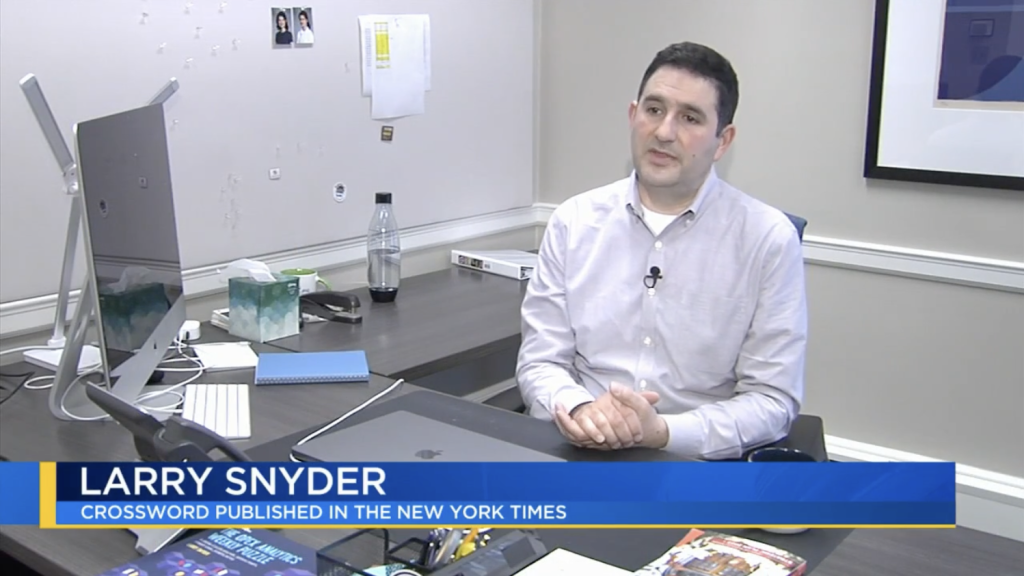
Who Is Larry Snyder?

Larry Snyder is a Harvey E. Wagner Endowed Chair in manufacturing systems engineering in Lehigh. There, he teaches the next generation of engineers and conducts research on supply chain management and energy systems. He is also a beloved student advisor, with many coming to him for guidance on their projects. In fact, he is adored by the whole faculty, who see him as a caring and knowledgeable teacher.

If that wasn’t enough, this family man co-teaches with his wife, Professor Suzanne Edwards, developing a course on Algorithms and Social Justice. In his spare time, when he isn’t making puzzles, he is spending time with his teenage daughters, bird watching, or working on his photography.

While puzzle-solving and creating was just one of many hobbies, he can now consider it a profession. On February 23rd this year, the professor saw his work in print. It includes some of his finest work, including a clever play on words about an ”early number” and ether.

Larry has enjoyed making puzzles at various levels and for different audiences for twenty years now. This casual hobby developed as a way to bring some joy to other people in his life. It grew from his immediate social circle to a wider audience through publication, and now the most famous puzzle section in the world.


From Logic Puzzles To Published Brainteasers

As a child, Larry was really into logic puzzles and word puzzles. For a long time, it was enough to get the satisfaction out of solving the puzzles and understanding how the clues worked. Eventually, as he got older and entered the engineering field, he got more interested in the mechanics of puzzle creation and cluemaking.

It makes sense that someone in this industrial sector would be more fascinated by how it all works and the cause and effect than the gratification of the solutions. He began making puzzles for students in 2003, providing them with a whole new way to learn and look at problems. Later, he found an additional form of employment, working part-time with a start-up consultancy firm. However, the puzzle-solving bug didn’t leave him, and was even encouraged by those around him. His new boss had him create a weekly puzzle for the team to solve. This fun little team-building exercise helped Larry build on his skills, as he brought in new mathematical puzzles, his old favorite logic puzzles, and some crosswords.

The team at the consultancy firm was so impressed with these weekly puzzles that demand grew. Their boss encouraged Larry to take things even further with a whole book of puzzles they could print and give out as Christmas presents. He ended up publishing two books and was completely hooked on puzzle creation. It was still a side venture as he focused on his consultancy and teaching work. Yet, there was undeniable talent there based on the responses of all those who received the books and completed the puzzles. Larry had a knack for constructing the puzzles and their clues to provide something equally fun and challenging.

When the pandemic hit, puzzle solving and puzzle creation became a more important outlet. It was then Larry found himself more interested in crosswords and how they worked. It was also when he got better acquainted with the New York Times game he would later be a part of. He bought a subscription to the games section for ultimate access to all the brainteasers and puzzles he could get his hands on. This was more than a way to pass the time in quarantine and escape from the realities of the pandemic. It was a way to develop his skills and knowledge in puzzle creation.


Creating The Perfect New York Times Puzzle

Before long, he was working on creating his very own crosswords. He soon learned that building a New York Times crossword was the most challenging of them all. There are distinct rules with the New York Times, which means the clues have to be up to standard, the grid has to be perfectly symmetrical, and you can fill in gaps with two-letter words.

These constraints put a lot of crossword designers off because it can take months to build the perfect puzzle from scratch, even with that helpful software. Yet, Larry wasn’t deterred and worked hard to crack the code. His publication in February is one of his greatest achievements. However, since then, he has gone on to be featured in other papers. He’s seen puzzles in the Los Angeles Times, Philadelphia Inquirer, Boston Globe, and, most recently, USA Today.


Inspiring Puzzle Creators Everywhere

Larry’s story shows that there is no reason why amateur puzzle creators can’t dream big and reach their goals. Larry makes the most of crossword-constructions software, something anyone can get into, to create a framework and find suggestions for suitable words. These prompts then help him pick the best options for his theme, or help him come up with something even better.

All the words are hand-picked for a truly unique and personal puzzle. After all, word choice and clue creation are where every creator gets to add their personal signature to their work. Some of the common themes that you will find in a Larry Snyder puzzle are mathematical and scientific, playing on his primary profession. He also works with food and movie themes. To go from these humble beginnings to the pages of respected publications shows that anyone can do this with the right level of talent, dedication, and enjoyment.

Remarkably, even with this crowning achievement, Larry still sees puzzle creation as a hobby. It is still a secondary creative outlet besides his academic work. Obviously, his work with his students at Lehigh is a priority, but hopefully, there will always be room for more puzzles.

Writers’ Strike Ends with New Contract, Actors Stand in Solidarity

The curtain has finally fallen on the 148-day writers’ strike in Hollywood. At the stroke of 12:01 AM today, a new contract marked the end of the labor dispute that had paralyzed the entertainment industry.

Hollywood producers, studios, and streaming platforms engaged in negotiations with the Writers Guild of America (WGA) to bring a resolution to the 148-day strike. This past Sunday, private discussions unfolded between WGA’s negotiating committee and the Alliance of Motion Picture and Television Producers (AMPTP), culminating in a tentative agreement.

A Unified Front

The strike, initially launched by the WGA in pursuit of enhanced benefits for its members, garnered additional support when actors from the Screen Actors Guild-American Federation of Television and Radio Artists (SAG-AFTRA) joined in on July 14. Their participation stemmed from concerns regarding the use of artificial intelligence and insufficient residual payments for work on streaming services.

Key Highlights of the Agreement

The details of the agreement, approved by members of the WGA’s East and West boards, are notable for several reasons:

1. Viewership-Based Residuals for Streaming Services

The agreement introduces a viewership-based residual system for streaming services, aligning compensation with the popularity of content.

2. Improved Residuals and Healthcare

It secures improved residuals and greater access to healthcare benefits for members, enhancing their overall well-being.

3. Protection Against AI-Generated Content

A significant provision ensures that artificial intelligence-generated content will not be recognized as source material, preserving the role of human creativity in the industry.

WGA officials have expressed confidence that these developments will resonate positively with all union members.

The Path Forward

The next pivotal step in this journey is the ratification vote among WGA members, scheduled for October 2-9. While the strikes remain temporarily suspended, if the contract fails to achieve unanimous approval, the strikes may resume. During the ratification process, all members are encouraged to return to work, contributing to a sense of normalcy within the industry.

SAG-AFTRA, while yet to reach an agreement with the AMPTP, stands in solidarity with its sister union, celebrating their success and emphasizing their involvement in finalizing the AMPTP’s contract.

Impact on the Entertainment Industry

The strikes have left a profound mark on the entertainment industry’s economic landscape, ranking as the most significant disruption since the onset of the COVID-19 pandemic. New York alone has witnessed the loss of 17,000 jobs.

Support Through Online Auctions

In an endeavor to support both strikes, members of SAG-AFTRA have taken to organizing online auctions. These auctions feature a range of activities and memorabilia, with proceeds directed toward crew members who have been unable to work due to the strikes.

Notable offerings include a dinner with Bob Odenkirk and comedian David Cross, a chance to have Parks and Recreation’s Adam Scott walk one’s dog, or an opportunity to tackle the New York Times crossword with Natasha Lyonne of Orange is the New Black fame.

Despite the tentative deal between WGA and AMPTP, these auctions continue unabated, as they remain a vital source of support for industry professionals affected by the strikes.

A Labor Movement in Unity

The Union Solidarity Coalition, the driving force behind the fundraising effort, underscores the importance of mutual support during this national labor crisis. The coalition encourages individuals to come together and explore innovative ways to aid one another in the face of unprecedented challenges.

The resolution of the writers’ strike and the ongoing negotiations with SAG-AFTRA signal a transformative period in the entertainment industry. As Hollywood looks toward the future, the solidarity and resilience of its members remain at the heart of its enduring spirit.

The end of the writers’ strike signifies a new chapter for the entertainment industry, marked by evolving agreements and collective efforts to navigate unprecedented challenges. The impact of these developments on Hollywood’s creative landscape will undoubtedly have an impact for years to come.

Apple Joins the Crossword World

Apple Expands its Ecosystem with Puzzles, Podcasts, and News

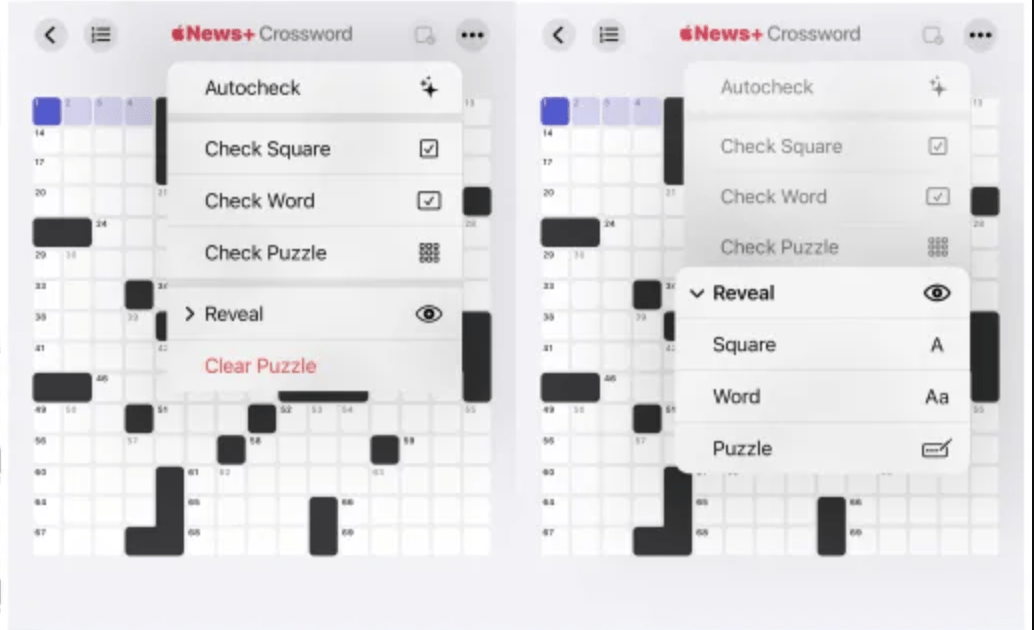
Apple News+ Crossword Apple News Plus Crossword Puzzle

Apple, the tech giant associated with innovation, has ventured into the domains of puzzles and news with its well-known grace. Silently introduced within the Apple News app, there is a whole new section devoted to puzzles. It features a daily crossword puzzle and a daily mini-puzzle. 

Apple made a significant strategic move by forming a partnership with the Puzzle Society. They now have their experienced team in charge of creating and managing these crossword puzzles. Currently, they are working with well-known crossword artisans to elevate the overall puzzle experience.

A Piece of the Puzzle Pie

Apple’s entry into the world of puzzles is not a solitary endeavor. In a clear demonstration of Apple’s dedication to the art of crosswords, it has teamed up with the Puzzle Society, enlisting renowned crossword creators to curate and craft captivating puzzles. 

With a focus on accessibility, Ross Trudeau, Apple’s puzzles editor, emphasizes a departure from obscure references that might confound solvers. The aim is to make crosswords more inclusive, welcoming newcomers without intimidating them with esoteric terms.

Apple vs. The New York Times

Puzzles have taken center stage in The New York Times, contributing to increased user engagement and retention of their subscribers for their bundles. The intellectual nature of puzzles aligns seamlessly with the realm of news offerings. While Apple’s initial puzzle offerings consist of crosswords, the Times has recently introduced a new puzzle called “Connections,” which has garnered positive reception. If Apple’s crosswords find a receptive audience, additional puzzle genres may be included, too.

Potential for Expansion

While Apple’s initial puzzle offerings focus on crosswords, it remains to be seen whether the company will introduce additional puzzle formats. The Times recently launched a puzzle called “Connections,” which has garnered considerable interest. If Apple’s crosswords prove popular, the addition of other puzzle types seems plausible.

A Unified Content Experience

Apple has taken steps to bring its podcast app closer in alignment with Apple News, Apple Music, and other services. This includes incorporating shows from Apple Music’s radio stations into the podcast app, as well as featuring Apple News podcasts like “Apple News Today.”

Additionally, Apple News is set to launch a new podcast called “Apple News+ Narrated,” featuring professional voice actors narrating stories from Apple’s publishing partners.

Lauren Kern, Apple News’s editor-in-chief, expressed excitement about “Apple News+ Narrated”: “Now subscribers can enjoy narrated articles representing some of the best journalism from News+ publishers on Apple Podcasts as well as in Apple News.”

Third-Party Podcast Subscriptions

Recognizing the growing trend of publishers offering subscription-based podcasts, Apple is now facilitating the connection of third-party subscriptions to its podcast app. This means that users with subscriptions to services like Calm or The Washington Post can seamlessly integrate their subscriptions with the podcast app, granting access to subscription-only podcasts directly within the app.

Conclusion

Apple’s entry into the world of puzzles and the evolution of its podcast offerings prove the company’s commitment to delivering an array of captivating content within its ecosystem. By diving into new different services, they both challenge their established competitors and open the doors to innovation and engagement across their apps and services. So, whether you’re a crossword enthusiast or a podcast fan, Apple continues to evolve and expand their services to serve you better.

Google’s 25th Birthday Doodles you can Play

It’s Google’s 25th birthday and it is by far the most visited website in the world, serving as the preferred choice of search engine following the decline of Yahoo in the early 2010s.

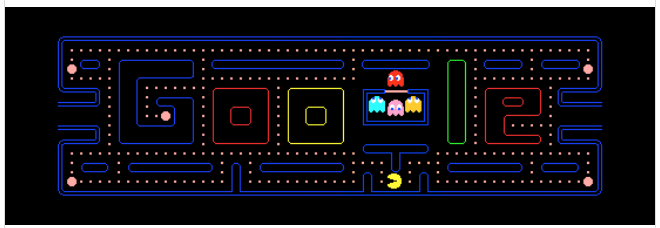
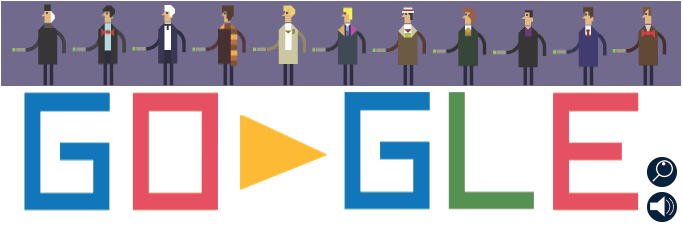
Google the most visited search engine in the world. The go-to place where you can get almost any answer for all the questions you have is celebrating it’s 25th year of birth.Our most preferred search engine choice has come a long way since its inception in September of 1998.

How google looked like in 1998

Now owned by its parent company Alphabet and lead by Sundar Pichai it is ranked as one of the most valuable companies in the world. Slightly less valued than apple but far more valued than other big names such as Walmart, IBM etc

Google is so popular that in fact ‘Google it’ has become synonymous with ‘Search it’ and it has been added in the dictionary of English language as such.  To celebrate this long history of success here are some Google games you can play Google for a short period of time.

    1. Crossword Puzzles: tried and tested through decades of popularity, crossword puzzles are a chilled out way to challenge your vocabulary knowledge and to expand your vernacular.


    1. Basketball 2012: this game was first released in 2012 and is pretty straightforward, the player simply has to shoot the ball into the basket to score as many points as possible before the time runs out.


    1. Pacman: Another classic involving our yellow friend looking to avoid being caught by ghosts, and occasionally even chasing after them himself.


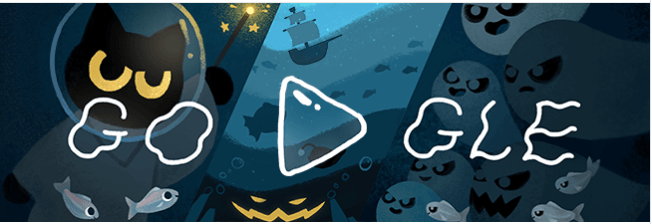
    1. Halloween: is a halloween themed Doogle as you can imagine from the name it has. Since halloween season is coming this is a nice game to play. You are a cat fighting monsters.


    1. Coding: Coding is a perfect game even for kids who want to sharpen their logical thinking and serves as an educational game to learn some very basic tasks and coding skills.


Disclaimer: This website operates independently and is not affiliated with The New York Times Company. Consequently, all copyrighted materials mentioned herein remain the sole property of their respective copyright holders.